
When to Mow Lifestyle Blocks in Western Bay
A lifestyle block can look tidy one week and suddenly feel out of control the next. Long grass around fences, sheds, orchard rows, driveways, and paddock edges can quickly make a property harder to use and maintain. Knowing when to mow lifestyle blocks helps Western Bay of Plenty property owners stay ahead of that growth without cutting grass too short or trying to mow in poor conditions.
For properties in Te Puna, Oropi, Te Puke, Paengaroa, Aongatete, Omokoroa, Katikati, Omanawa, Pongakawa, Maketu, and Tauranga, the right mowing timing depends on more than a date on the calendar. Grass type, rainfall, soil moisture, slope, access, livestock, trees, and the intended use of each area all matter.
When to mow lifestyle blocks: follow the grass, not just the calendar
The most reliable rule is to mow when the grass has enough growth to justify a cut, before it becomes long, heavy, or difficult to manage. During active growth, that may mean mowing every two to four weeks. In slower periods, a block may only need attention every four to eight weeks.
A fixed schedule can be useful, especially for a large property with open lawns and regular access. But it should still allow for weather. A wet spring can create far more growth than expected, while dry summer conditions may slow growth significantly. The goal is consistent, tidy grassed areas rather than mowing simply because a certain number of weeks has passed.
For most maintained lawn and grass areas, avoid removing more than about one-third of the grass height in one pass. Cutting a very overgrown area too low can stress the grass, expose soil, and leave clippings clumped across the surface. If the grass has become especially long, it may need a higher first cut and a follow-up mow once it has settled.
Seasonal mowing needs in the Western Bay of Plenty
Spring: plan for fast growth
Spring is usually the busiest mowing season for lifestyle blocks. Warmth, rain, and longer daylight hours can produce rapid growth, particularly in fertile areas around Te Puna, Oropi, and Tauranga. A property that was manageable a month ago may need mowing much sooner than expected.
At this time of year, regular mowing helps keep grass from becoming thick and tangled around buildings, accessways, fruit trees, and fence lines. It also gives property owners a clearer view of their grounds, which can make it easier to spot fallen branches, drainage issues, or areas that need repair.
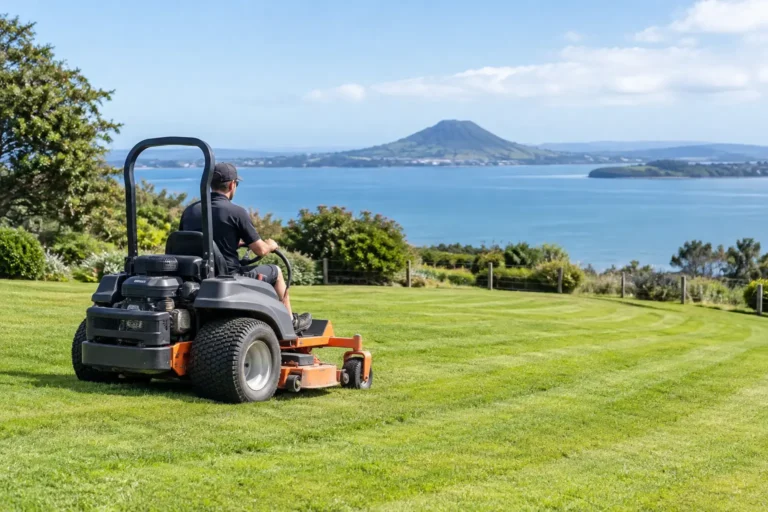
If your property has open grassed areas that are suitable for a ride-on mower, booking regular mowing early in spring is often easier than waiting until the grass is long. Regular work is generally more efficient, produces a neater result, and reduces the chance that wet weather will turn a straightforward job into a difficult one.
Summer: mow for use, appearance, and fire preparedness
Summer mowing depends heavily on rainfall. Some lifestyle blocks remain green and continue growing strongly, while exposed or dry areas may slow down. Instead of cutting every section at the same height, consider how each part of the property is used.
Areas near the house, driveway, entertaining spaces, rental homes, schools, or commercial buildings usually benefit from a more regular, tidy finish. Larger outer areas may be maintained on a less frequent schedule, provided grass does not become excessive or create access problems.
Long dry grass around structures, gates, machinery areas, and regularly used tracks also deserves attention. Mowing is not a substitute for a full fire management plan, but keeping grassed areas maintained can reduce the amount of dry material sitting close to buildings and access routes.
Fall: keep access clear before wetter weather
Fall is a good time to bring grassed areas back under control before wetter weather arrives. Growth may slow, but grass can still become long enough to hold moisture, hide uneven ground, and make paths or work areas less practical.
For lifestyle blocks in Katikati, Omokoroa, Aongatete, and nearby rural areas, this is also a useful time to assess access. If a mower needs to travel through a gate, along a track, or around an orchard, it is better to deal with soft ground, low branches, or obstacles before winter makes conditions more challenging.
Winter: mow when ground conditions allow
Winter mowing is often less frequent, but it is not always unnecessary. Grass can continue to grow during mild, wet periods, especially in sheltered locations. The main consideration is ground condition.
Ride-on mowing on saturated or very soft ground can leave wheel marks, compact soil, or create ruts. Wet grass can also clump and give a less even finish. Sometimes the best decision is to wait for a suitable dry window rather than force a mow because it is due. A reliable mowing service should assess the conditions and recommend a practical approach.
Signs your block is ready for mowing
You do not need to measure every blade of grass. In most cases, the property itself will tell you when mowing is becoming necessary. Grass may be ready for attention when it starts to obscure edges, lean across tracks, gather around fence posts, or look uneven from the road or driveway.
It is also time to consider mowing when the grass is becoming difficult to walk through, when clippings from a future cut are likely to be excessive, or when weeds are beginning to stand above the surrounding grass. On a larger property, waiting too long can turn a routine mow into a longer job that may require more than one pass.
Different areas can have different priorities. A front lawn may need regular presentation mowing, while an unused back section may only need periodic control. That is why an initial site assessment is useful. It helps set a mowing frequency that suits the property rather than applying one schedule everywhere.
Conditions to check before a ride-on mow
Ride-on mowing is a practical option for large, open, reasonably accessible grassed areas. Before work begins, the site should be checked for conditions that affect safety and results. This includes steep or unstable slopes, drainage channels, tree roots, rocks, holes, low branches, unmarked obstacles, soft ground, and narrow access points.
Livestock, pets, children, vehicles, and temporary equipment should be clear of the mowing area. Gates need to be accessible, and property owners should point out underground services, sprinkler heads, septic areas, or places where the ground is known to be soft. A few minutes of communication before the first mow can prevent damage and help the job run smoothly.
Not every part of a lifestyle block will suit a ride-on mower. Steep banks, very rough ground, dense scrub, and tight spaces may require a different approach. Clear advice about what can be safely mowed is better than promising a result that the site conditions do not support.
Choose a mowing schedule that fits your property
One-off mowing works well when grass has grown after a tenant change, a period away from the property, a wet season, or before an event or sale. Casual mowing can suit owners who manage most of the work themselves but need help when growth gets ahead of them.
For many lifestyle block owners, a regular schedule is the simplest option. It removes the need to watch the weather, organize equipment, set aside a weekend, or deal with a large job after weeks of growth. Regular mowing can be adjusted as seasons change, with more frequent visits in fast-growing periods and less frequent visits when growth slows.
This approach is also useful for landlords, property managers, body corporates, schools, orchards, and businesses with larger grassed areas. Consistent maintenance helps keep sites presentable and easier for residents, staff, visitors, and contractors to use.
Make mowing easier before the next visit
A tidy, accessible site helps produce a better result. Before a scheduled mow, remove hoses, toys, loose materials, and obvious debris from the grass. If access has changed because of a locked gate, parked vehicle, stock, or roadworks, let your mowing provider know in advance.
It also helps to identify which areas matter most. You may want a neat finish around the home and driveway, routine mowing around orchard rows, or periodic maintenance across a larger vacant section. Clear priorities allow the work to match how you use the property.
For lifestyle blocks across Tauranga and the wider Western Bay of Plenty, timely mowing is less about chasing a perfect calendar date and more about keeping your land safe, usable, and under control. If the grass is getting ahead of you, arranging a free quote with Prime Ride-On Mowing can be a practical first step toward getting your weekends back.