How to Mow Long Grass Safely on Large Lawns
Long grass can hide far more than an untidy lawn. On lifestyle blocks, vacant sections, orchards, school grounds, and large residential properties across Te Puna, Oropi, Te Puke, Paengaroa, Aongatete, Omokoroa, Katikati, Omanawa, Pongakawa, Maketu, Tauranga, and the wider Western Bay of Plenty, it can conceal holes, rocks, wire, drains, branches, and uneven ground. Knowing how to mow long grass safely protects people, machinery, fences, and the property itself.
The safest approach is rarely to rush in and cut it all down in one low pass. Long grass needs a little planning, the right equipment, and realistic expectations about what the site will allow.
Start by assessing the property
Before starting a mower, walk the area where practical. This is especially important when grass has grown over ankle height, after a long wet period, or on a property that has been vacant. Look for hard objects such as timber, stones, irrigation parts, old fencing wire, toys, and discarded rubbish. These can damage mower blades or become dangerous projectiles.
Pay close attention to changes in ground level. Long grass can hide rabbit holes, washouts, drainage channels, tree roots, and soft patches. A ride-on mower is efficient on large open areas, but it needs stable ground and adequate visibility. If the ground is steep, very rough, boggy, or close to a ditch or pond, that area may need a different method or may need to be left until conditions improve.
Also check the boundaries. Identify fence lines, gates, septic systems, garden edges, young trees, power boxes, water meters, and low-hanging branches before mowing. On commercial sites, body corporate grounds, and schools, it is also sensible to confirm that the area is clear of people, pets, vehicles, and outdoor equipment.
Do not mow wet long grass if you can avoid it
Wet grass is heavier, slippery, and much more likely to clog a mower deck. It also reduces traction, which matters on slopes and around uneven ground. Even a gentle incline can become unsafe when the soil is damp and the grass is lying over.
Wait for the grass and ground to dry where possible. This produces a cleaner cut, reduces clumping, and makes it easier to see hazards as you work. In the Western Bay of Plenty, rapid grass growth after rain is common, so waiting a day or two for better conditions is often safer than trying to force a cut during wet weather.
If mowing cannot wait, reduce the area being tackled, use a higher cutting height, and avoid slopes, soft ground, and tight turns. Never assume a ride-on mower will handle wet long grass simply because it has handled dry grass before.
Use equipment suited to the grass and terrain
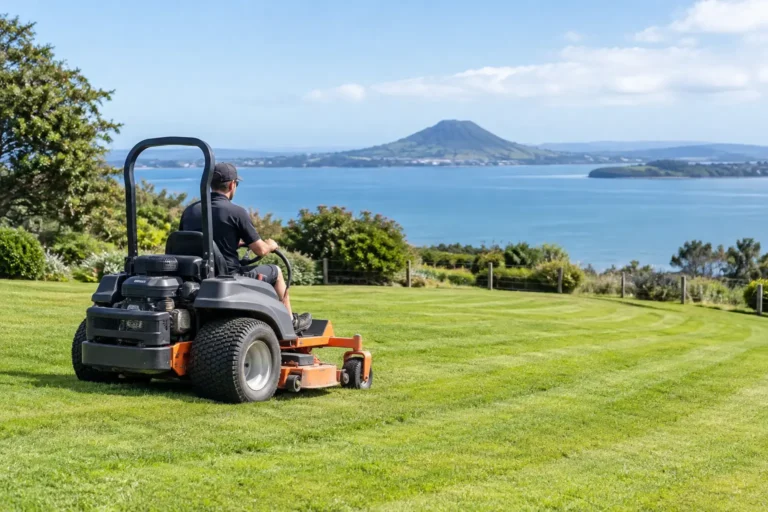
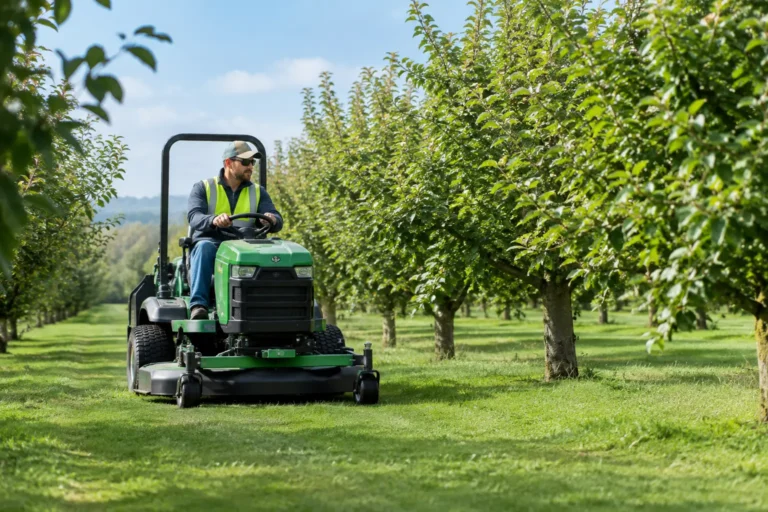
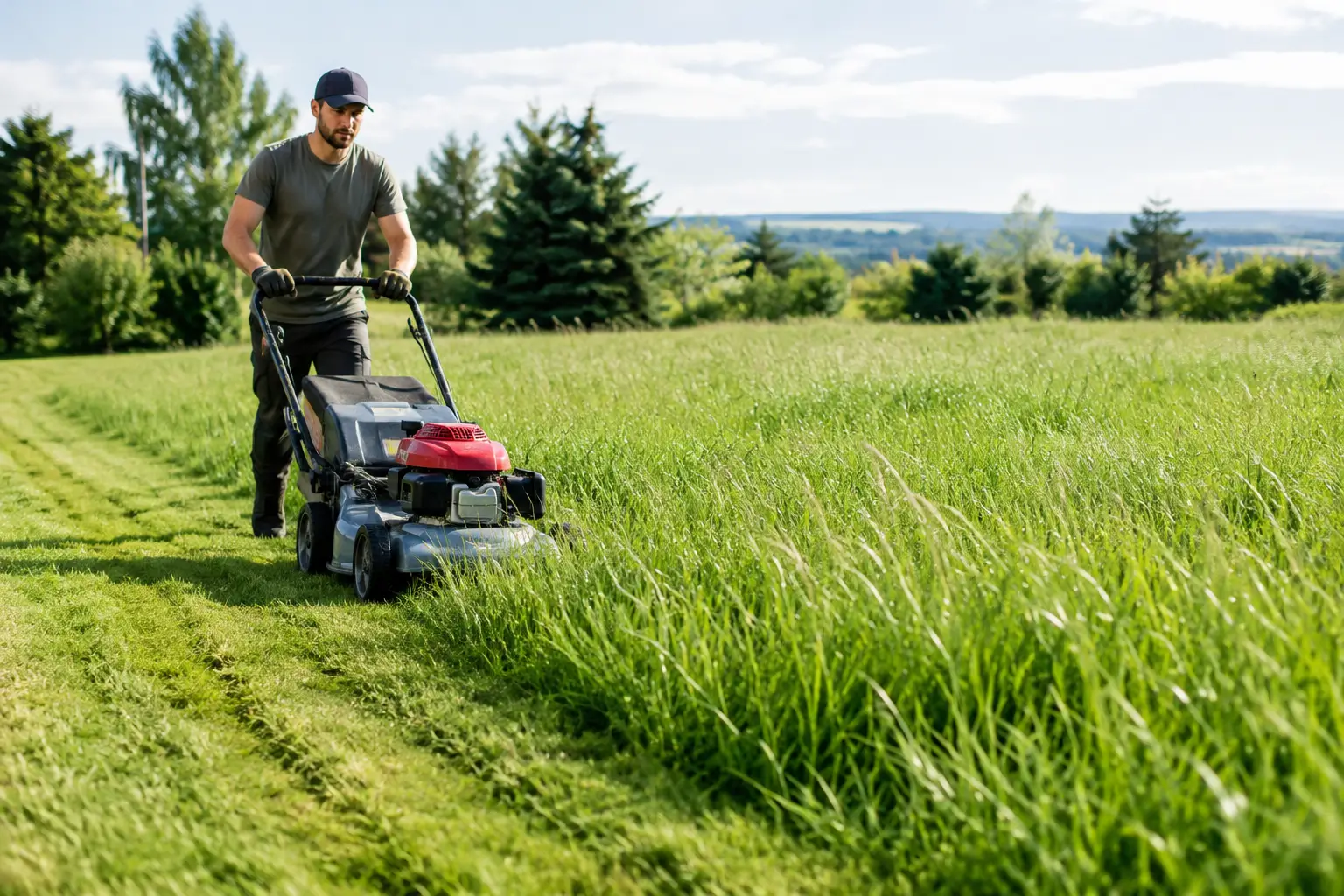
Long grass puts more load on any mower. A small domestic mower can struggle, overheat, clog repeatedly, or leave thick clumps behind on a large property. For broad, reasonably level grassed areas, a suitable ride-on mower can save substantial time while keeping the work more consistent.
The machine should be in good working order, with sharp blades, correctly inflated tires, guards in place, and a clear mower deck. Dull blades tear long grass instead of cutting it cleanly. That leaves a rough finish and places unnecessary strain on the mower.
Wear sturdy enclosed footwear, long pants, hearing protection, and eye protection. Long grass can throw dust, seed heads, stones, and debris from underneath the deck. Avoid loose clothing that could catch on controls or moving parts.
For very dense growth, woody weeds, or grass taller than the mower can reasonably manage, the first pass may require a slasher, brush cutter, or another suitable machine. It depends on the site. Trying to make a standard mower do work it was not designed for can create unnecessary safety and repair risks.
Set the deck high for the first pass
One of the most useful rules for mowing long grass safely is to avoid cutting it too short straight away. Set the mower deck to its highest or near-highest practical setting for the first pass. This allows the machine to take off the top growth without choking on a full load of grass.
After the cuttings have dried or settled, a second pass at a lower setting can create a neater result. On very overgrown land, this may take two or three cuts over several days. That is normal. A staged approach is safer for the operator and easier on the grass, which is less likely to be scalped or stressed.
Use a slower travel speed than you would for regular maintenance mowing. Give the blades time to cut and discharge the grass. If the mower begins leaving heavy windrows, losing power, or clogging, stop on level ground, switch it off, remove the key, and wait for all moving parts to stop before clearing the deck. Never reach beneath a mower while it is running.
Choose a safe mowing pattern
Mow in a pattern that gives you a clear view ahead and minimizes sharp turns. On open areas, start by making a perimeter pass where it is safe to do so, then work inward in straight, overlapping runs. The overlap prevents strips of tall grass from being missed.
On slopes, take extra care. Follow the mower manufacturer’s guidance for slope limits and operating direction. As a general rule, avoid mowing across steep slopes where a ride-on mower could slide or tip. Do not mow near the edge of banks, drains, retaining walls, or water. Long grass can make the edge difficult to judge.
Keep children, pets, workers, and bystanders well away from the mowing area. Stop work if someone enters the zone. This matters on shared grounds in Tauranga, Omokoroa, Katikati, and other busy Western Bay communities where residents, staff, visitors, or contractors may be moving around the property.
Watch for fire and visibility risks
Dry, long grass can create a fire risk, particularly around machinery with hot engines and exhaust systems. Clear built-up dry material from the mower deck and engine area as recommended by the manufacturer. Do not park a hot mower in tall dry grass, and refuel only when the engine is cool and away from ignition sources.
Visibility matters too. Avoid mowing in poor light, heavy rain, or fog. You need to see the ground ahead, the discharge area, property boundaries, and anyone approaching the work zone. If the grass is tall enough to obscure obstacles, extra daylight and a slower pace are worth the time.
Know when professional mowing is the safer option
Some long-grass jobs are larger or more complex than they first appear. A one-off cut on a vacant section, an orchard boundary, a lifestyle block, or a commercial property may involve rough terrain, unknown debris, restricted access, or grass that has grown well beyond normal maintenance height.
That is where an experienced ride-on mowing service can make the job more manageable. Prime Ride-On Mowing assesses the grassed area, access, ground conditions, obstacles, and the level of growth before work begins. This helps set clear expectations about what equipment suits the property and whether a single cut or staged mowing approach is required.
Regular mowing is usually the simplest way to avoid the risks of overgrown grass returning. For landlords, property managers, businesses, schools, body corporates, and owners of larger properties, a scheduled service can keep grassed areas neat without losing weekends to catch-up mowing.
Keep the next cut easier
Once long grass has been brought under control, choose a mowing frequency that matches the season, rainfall, and property use. Fast-growing spring grass may need more attention than dry summer growth. Areas near driveways, buildings, entrances, and paths may also benefit from a tidier finish than paddock-style grassed zones.
For property owners across Te Puna, Te Puke, Maketu, Paengaroa, Pongakawa, and the wider Western Bay of Plenty, the goal is not simply shorter grass. It is a safer, more usable property that stays under control before the next growth spurt makes the job difficult again.