School Grounds Mowing Service That Fits School Life
A well-kept school lawn does more than improve first impressions at the gate. It gives students room to play, supports outdoor learning, and helps staff, families, and visitors feel that the site is cared for. A reliable school grounds mowing service takes the pressure off school staff by keeping larger grassed areas neat without adding another job to an already full schedule.
For schools, mowing is not simply a matter of cutting grass when it gets long. Work needs to fit around drop-off times, classes, sports, events, wet weather, and school holidays. The right mowing plan is one that keeps grounds presentable while respecting how the site is used each day.
What a School Grounds Mowing Service Should Cover
Schools often have more grass than they first realize. There may be front entrance lawns, field edges, play areas, open spaces between buildings, roadside verges, staff parking areas, and less-visible grassed sections behind classrooms or near storage sheds. These areas can grow at different rates and have different access requirements.
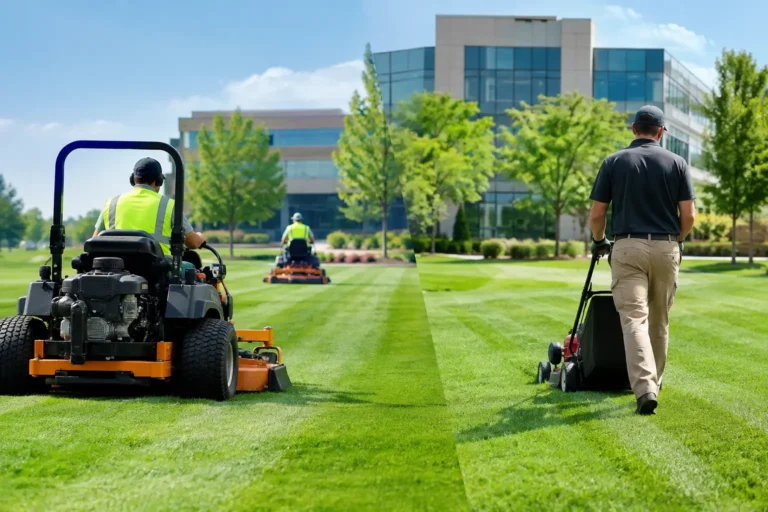
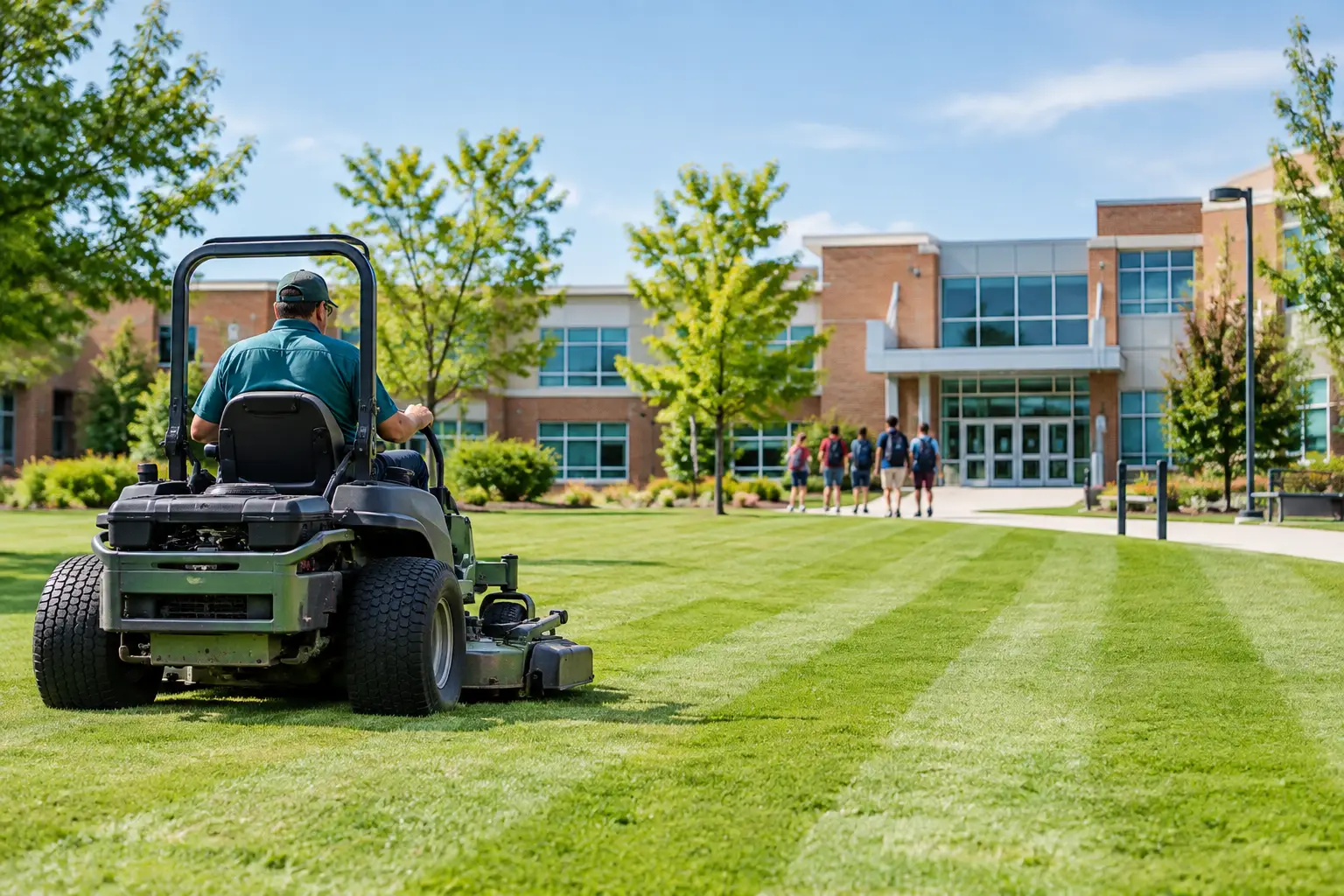
Ride-on mowing is a practical option for larger, open grassed areas where it is safe to operate. It allows broad lawns to be maintained efficiently and consistently, helping prevent the uneven, overgrown look that can develop when mowing is delayed. It can be particularly useful for school fields, large perimeter lawns, and grounds shared with community facilities.
A suitable mowing service should begin by looking at the property itself. Access width, slopes, drainage, obstacles, parked vehicles, playground equipment, trees, garden borders, and the condition of the turf all affect how the work is planned. This is especially useful for schools with a mix of wide open lawns and smaller, more detailed areas.
Not every part of a site will suit a ride-on mower. Tight corners, steep banks, wet patches, and areas close to structures may need a different approach or may be outside the scope of a ride-on mowing visit. Being clear about these conditions before work starts helps avoid surprises and ensures the right expectations are set.
Mowing Around a Busy School Day
The best mowing schedule depends on the size of the grounds, the season, grass growth, and how the school uses its outdoor spaces. During faster-growing periods, lawns may need more frequent attention. In drier or cooler periods, the schedule can often be adjusted.
For many schools, regular scheduled mowing is the easiest option. It provides consistency, makes budgeting simpler, and means grounds do not need to become overgrown before action is taken. A regular visit can also help school managers avoid the scramble of finding someone before an open day, sports fixture, inspection, or community event.
Timing matters just as much as frequency. Mowing may be better suited to quieter periods, outside peak arrival and departure times, or during school holidays where practical. There is no single schedule that suits every school. A small rural school with extensive lawns may need a different plan from a busy urban campus with limited access and constant foot traffic.
Clear communication is essential. The person arranging the service should be able to let the mowing contractor know about special events, grounds closures, construction work, vehicle access, or changes to normal school operations. In return, the contractor should confirm when work is planned and raise any site issue that could affect safe access.
Safety Comes Before a Neat Finish
School grounds are active places, so mowing needs to be managed with care. Students, staff, caregivers, contractors, and visitors may all be moving around the property. A mowing service should assess the work area before starting and avoid operating where people are nearby or where the site is not suitable for machinery at that time.
Before mowing, it is sensible to check for loose objects on the grass. Sports equipment, branches, rubbish, stones, cones, and toys can interfere with equipment or become hazards. Regular mowing helps because it makes these checks easier, but the area still needs to be assessed on each visit.
Wet ground deserves particular attention. Heavy machinery on saturated turf can leave ruts, compact the soil, and damage grass that is already under stress. While it can be frustrating to postpone a planned visit, waiting for better conditions is often the more responsible choice. A tidy lawn is valuable, but not at the cost of damaged grounds or unsafe mowing conditions.
Schools should also consider how mowing fits alongside sports field use. Grass height, surface condition, and the timing of mowing can affect whether a field is ready for practice or a school event. If certain areas need to be prepared before a set date, it is helpful to discuss that requirement early rather than relying on a last-minute visit.
Why Regular Lawn Care Saves Work Later
Long grass can quickly make a school property feel neglected, particularly around entrances, signs, walkways, and shared public-facing areas. It can also hide litter, uneven ground, and objects that need attention. Regular mowing keeps these areas more visible and easier to manage.
There is a practical benefit as well. Cutting grass frequently enough to avoid excessive growth is generally easier on the lawn and more manageable for mowing equipment. When grass becomes very long, the work can take longer, clippings may be more noticeable, and the result may not be as clean as a lawn that has been maintained consistently.
For principals, office managers, property managers, and board members, outsourcing larger-area mowing also protects staff time. A school caretaker may have many responsibilities, from minor repairs to opening buildings and coordinating contractors. Handing over broad mowing work means that time can be spent on the tasks that require a staff member to be on site.
Choosing a Mowing Provider for School Grounds
A good provider will be straightforward about what they can mow, how often they can attend, and what access they need. They should ask practical questions rather than offering a one-size-fits-all answer. For example, is there secure gate access? Are there periods when machinery cannot enter? Which areas are used for play or sports? Are there slopes, drainage channels, or soft ground to consider?
It is also worth confirming whether the service is intended for a one-time tidy-up, casual mowing when required, or an ongoing maintenance schedule. One-time mowing can be useful after a period of rapid growth or before an event. However, a regular plan is usually the more convenient choice for schools that want consistently tidy grounds throughout the year.
Prime Ride-On Mowing works with larger lawns and properties across the Western Bay of Plenty, including school grounds where open grassed areas are suitable for ride-on mowing. Before starting, the site conditions, access, and mowing requirements should be assessed so the work can be planned safely and realistically.
A Practical Standard for Every Visit
The goal is not to make a school lawn look like a private garden. School grounds need to be functional, presentable, and ready for daily use. Some areas may be kept shorter for activities and visibility, while outer lawns or less-used sections may simply need regular control so they remain tidy.
A dependable mowing arrangement gives school staff one less operational task to chase. With clear access, sensible scheduling, and attention to site conditions, large grassed areas can stay under control without taking up weekends or adding pressure to the school team.
If your school has lawns that are becoming difficult to keep up with, start by identifying the areas that need regular attention and the times machinery can safely access the site. A clear conversation before the first cut will lead to a mowing plan that works around school life, not against it.