Mowing Around Irrigation Lines Without Damage
A ride-on mower can make short work of a large lawn, orchard verge, or lifestyle block, but mowing around irrigation lines calls for more care than mowing open grass. A hidden pipe, raised sprinkler head, or valve box can be damaged quickly if it is not identified before the mower starts. For property owners across Te Puna, Oropi, Te Puke, Paengaroa, Aongatete, Omokoroa, Katikati, Omanawa, Pongakawa, Maketu, Tauranga, and the wider Western Bay of Plenty, a little preparation helps protect an irrigation system and keeps the grounds looking tidy.
The goal is not to leave awkward, overgrown strips around every irrigation feature. It is to mow efficiently while giving pipes, sprinklers, valves, and controllers the clearance they need. The best approach depends on whether the irrigation is buried, surface-laid, temporary, or installed through an orchard or large open lawn.
Why Irrigation Lines Need Extra Care
Irrigation systems are easy to forget when grass is growing fast. Underground pipes may have shallow sections near garden edges, pump connections, or recently repaired areas. Sprinkler heads can sit almost level with the lawn when they are working properly, making them difficult to see in long grass. Valve boxes may be covered by clippings, soil, or creeping grass.
A mower wheel rolling over a poorly supported valve box can crack its lid or shift fittings beneath it. A mower blade can break a raised sprinkler, cut exposed drip line, or strike a temporary hose. Damage is not always obvious right away. A small split in a pipe may show up later as a wet patch, reduced water pressure, or an unexpectedly high water bill.
There is also a practical mowing issue. Water-softened soil, especially after rain or irrigation, is more likely to rut under a ride-on mower. In Western Bay of Plenty properties with slopes, orchard rows, or heavier ground, those ruts can direct water toward low spots and make later mowing rougher.
Identify the System Before Mowing
Before a regular mowing schedule begins, walk the grassed area with the property owner or site manager. This is particularly worthwhile on a new property, a vacant section, a school ground, or a lifestyle block where different areas may have been installed at different times.
Look for sprinkler heads, valve boxes, backflow devices, taps, filters, hose connections, pump lines, irrigation controllers, and exposed drip tubing. Ask where the main lines run, whether any lines are shallow, and whether there have been recent repairs. A repair trench may be soft for weeks, even if the grass has regrown over it.
Visible features should be easy to find from the mower seat. Bright marker flags can be useful before mowing, especially where sprinkler heads sit low or valve boxes blend into the lawn. For permanent features, a clearly maintained edge around the box or head is often better than relying on memory alone. Markers should be tall enough to see but placed so they do not become another obstacle for mowing equipment.
For buried lines with no surface indicators, keep a simple property plan. It does not need to be complicated. A sketch showing pipe routes, valves, heads, and areas that should not be driven over gives anyone maintaining the property a safer starting point.
Mowing Around Irrigation Lines With a Ride-On Mower
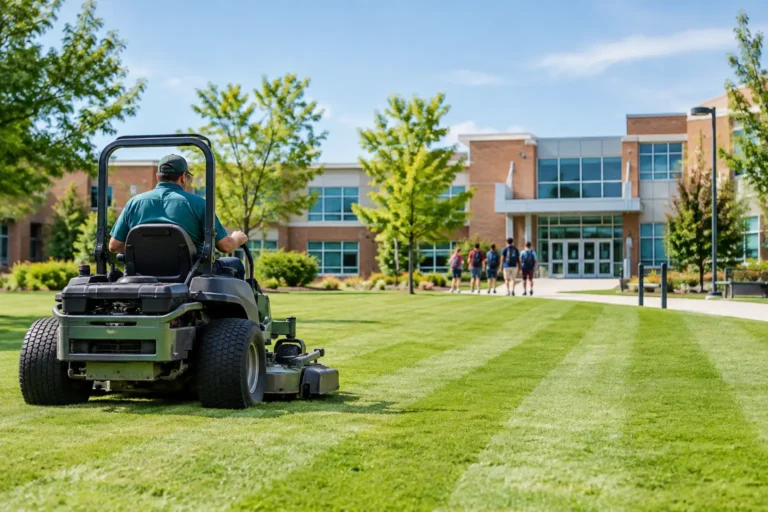
A ride-on mower is well suited to broad, open grassed areas, but it should not be forced into tight spaces around irrigation equipment. Start by mowing the open sections where the irrigation layout is clear. Then work methodically toward the edges, reducing speed when approaching any marked feature or known pipe route.
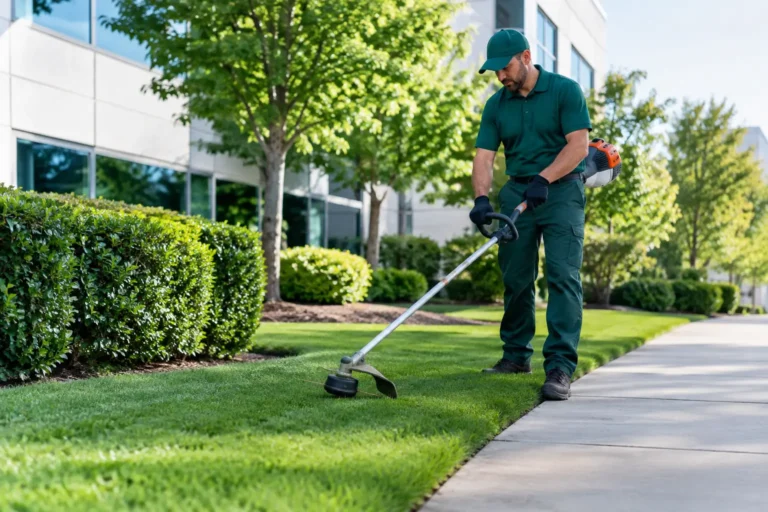
Keep mower blades well clear of raised sprinkler heads, exposed tubing, and taps. Do not try to shave the grass right beside a sprinkler head with the deck. Leave a small margin, then trim that area by hand if a neat finish is needed. On large commercial grounds, orchards, or body corporate properties, this extra step is generally quicker and less costly than replacing damaged irrigation parts.
Avoid turning sharply on top of valve boxes, sprinkler zones, or recently repaired ground. Tight turns place more sideways pressure on turf and can disturb shallow components below. Where possible, make turns in open grass and use straight passes alongside irrigation zones.
If lines are surface-laid or temporary, they should ideally be removed or relocated before mowing. A ride-on mower is not appropriate over exposed hose or drip line. Even if the blade does not touch it, the weight of the mower can flatten, pinch, or pull connections apart. Where irrigation must remain on the surface, mow only the accessible areas and use suitable smaller equipment for the rest.
Set the Right Mowing Height
Cutting too low does more than stress the grass. It makes sprinkler heads, valve covers, and uneven ground more exposed to mower contact. A sensible mowing height keeps the lawn tidy while leaving enough cover for healthy growth and moisture retention.
The right height depends on grass type, season, traffic, and how the area is used. A large residential lawn may need a different finish from an orchard lane or a vacant section. During fast spring growth, regular mowing at a moderate height is usually safer than waiting until the grass is long and attempting one aggressive cut around irrigation equipment.
Mow When the Ground Is Firm
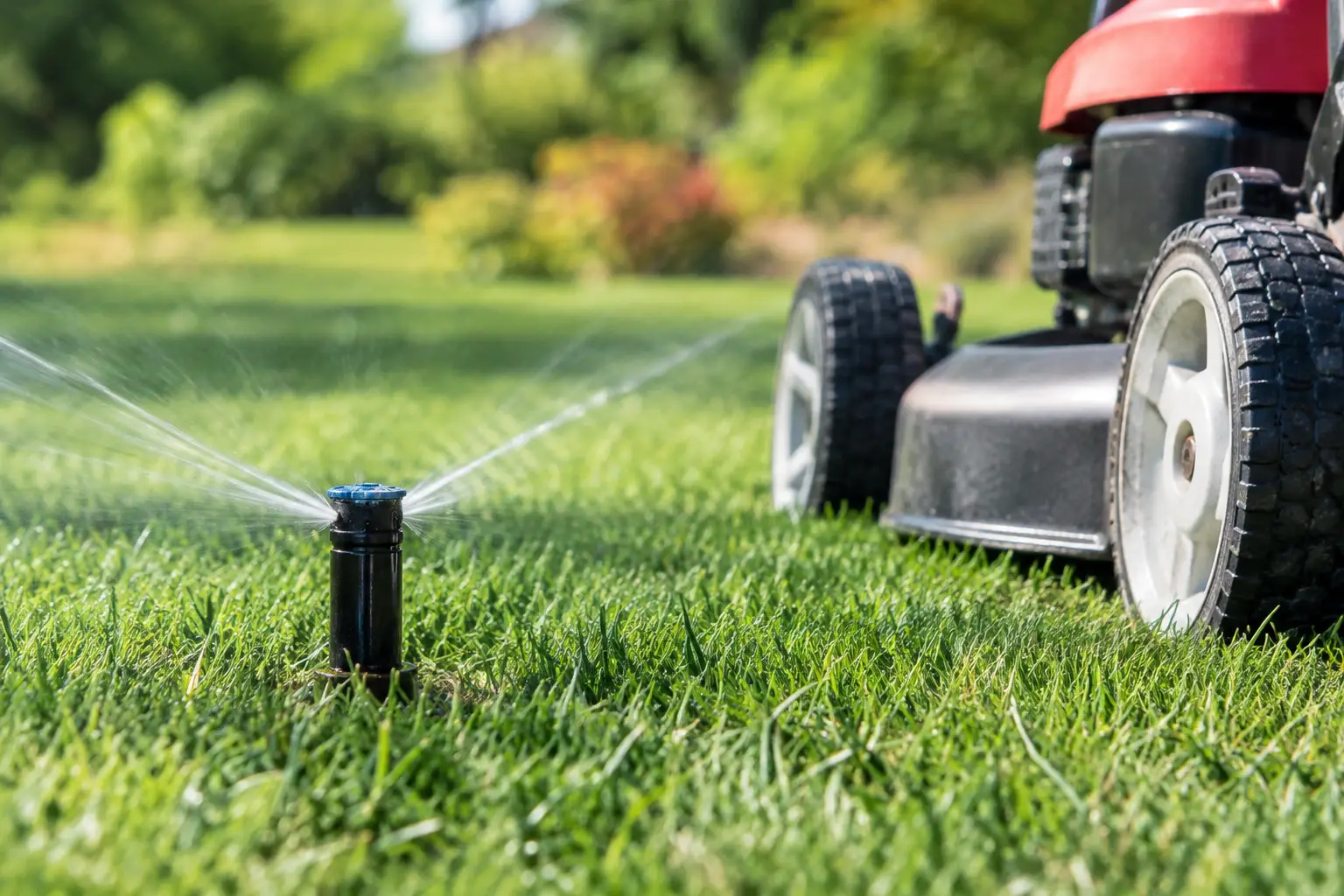
Switch irrigation off before mowing whenever possible. This prevents sprinkler heads from operating while machinery is nearby and gives wet areas time to drain. It also makes it easier to spot leaks or damaged heads after the work is complete.
Mowing immediately after a watering cycle is rarely ideal. Wet grass can clump beneath the deck, and soft soil can leave wheel marks. If the property has an automated schedule, set watering for a time that allows the turf to dry before mowing. The exact timing depends on weather, soil type, and shade, but firm ground is the safer target.
Areas That Often Need a Different Approach
Not every irrigation layout should be treated the same way. Large lawns with pop-up sprinklers are often straightforward once heads and valve boxes are mapped. The mower can cover most of the area, with careful passes and occasional trimming around individual heads.
Orchards and lifestyle blocks can be more complicated. Drip lines may run along rows, around young trees, or near posts and sheds. Some lines are deliberately exposed for access and adjustment. These areas need a clear mowing route that stays off the tubing, rather than an attempt to mow every blade of grass with the ride-on mower.
On schools, commercial grounds, and body corporate sites, irrigation components may be spread across high-traffic lawns, garden edges, and shared access areas. Consistent maintenance records help here. When a sprinkler head is repaired, moved, or capped, the mowing plan should be updated too. This is especially useful where several people are responsible for landscaping, irrigation, and grounds care.
Properties with uneven terrain also deserve extra attention. In places such as Katikati, Omokoroa, and Te Puke, large grassed sections may include slopes, drainage swales, orchard margins, or low-lying areas. Water can collect above buried lines or around valves. If the ground is soft, it is better to leave that strip until conditions improve than risk damage to turf, pipes, or equipment.
Check the Area After Each Mow
A quick post-mow check can prevent a small issue from becoming an expensive repair. Look for broken or leaning sprinkler heads, displaced valve box covers, fresh wet patches, damaged markers, or exposed line. If a sprinkler has been struck, turn that irrigation zone off and arrange repairs before the next watering cycle.
Clippings should not be piled over valve boxes, controllers, or pump equipment. They can make access difficult and hold moisture where it is not wanted. Keeping these points visible also saves time when irrigation needs servicing.
For regularly maintained properties, the first few visits are when the mowing pattern is refined. Once the system layout, ground conditions, and no-go areas are clear, ongoing mowing becomes more efficient and predictable. That is a real benefit for landlords, property managers, businesses, and homeowners who want their larger grassed areas kept under control without spending weekends managing the details.
Prime Ride-On Mowing assesses access, terrain, grass conditions, and obstacles before work begins, including irrigation features that need to be protected. For larger lawns and properties across Tauranga and the Western Bay of Plenty, clear information about your irrigation layout helps create a mowing plan that keeps the grass neat without taking unnecessary risks around your water system.
A well-marked irrigation system and a sensible mowing routine make a noticeable difference over time. If you are arranging regular mowing for a property in Te Puna, Paengaroa, Maketu, Pongakawa, or nearby, point out any irrigation lines at the first visit so the right care can be built into every cut.