
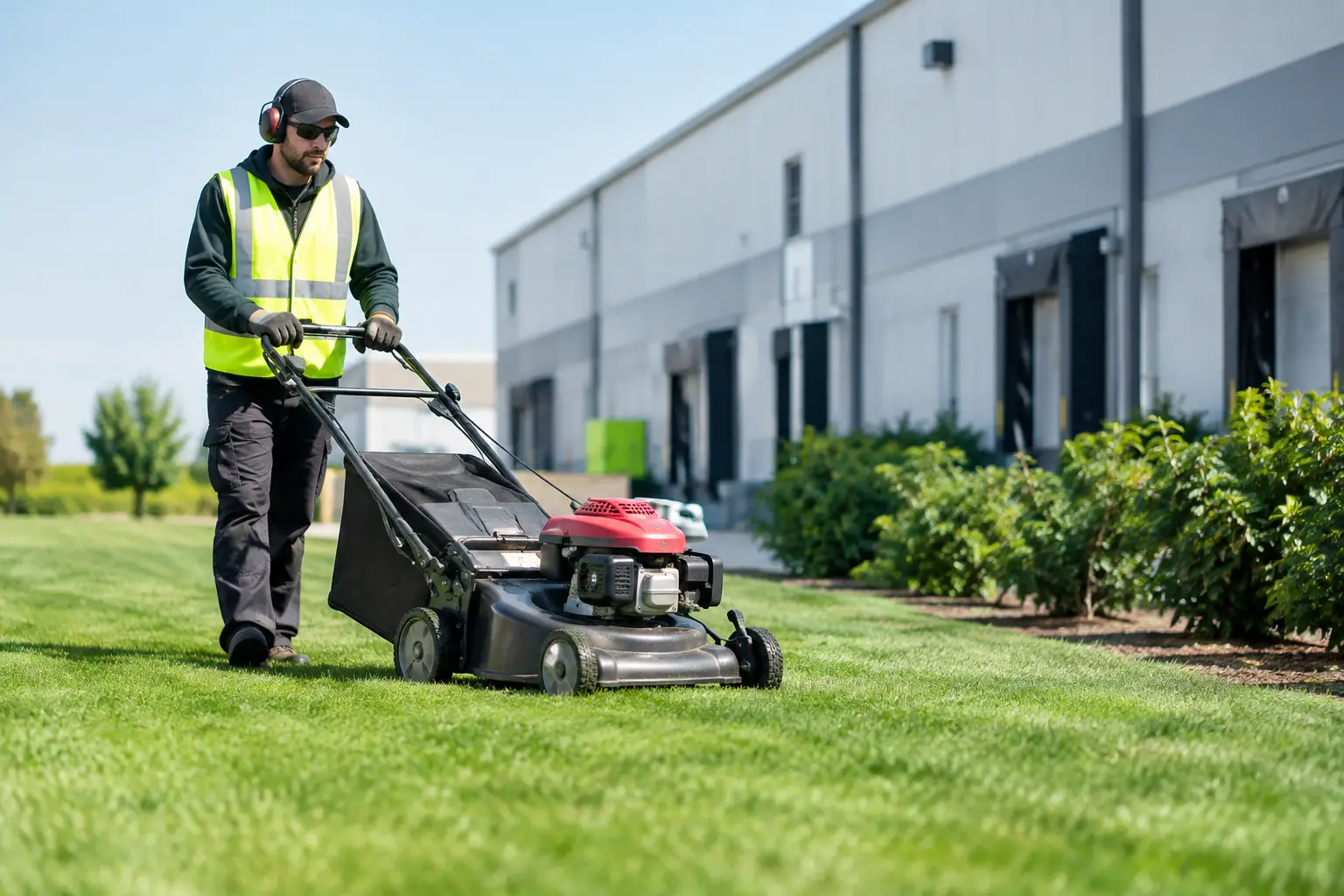
Warehouse Grounds Mowing for Safer, Tidier Sites
A warehouse site can look well run from the loading dock and still have long grass spreading along its boundaries, parking areas, and unused corners. Warehouse grounds mowing keeps those larger grassed areas tidy without adding another job to an already busy maintenance schedule. For businesses across Tauranga and the Western Bay of Plenty, a regular mowing plan helps create a safer, more presentable site for staff, drivers, visitors, and tenants.
Prime Ride-On Mowing works across Te Puna, Oropi, Te Puke, Paengaroa, Aongatete, Omokoroa, Katikati, Omanawa, Pongakawa, Maketu, Tauranga, and the wider Western Bay of Plenty. Ride-on mowing is well suited to warehouses with broad lawns, roadside verges, boundary strips, stormwater areas, and grass around storage or office buildings.
Why warehouse grounds need regular mowing
Warehouse grounds are working spaces, not just lawns. Delivery vehicles move in and out, employees park and walk across the property, contractors arrive for maintenance work, and customers or suppliers may visit at short notice. Overgrown grass can make an otherwise organized facility look neglected.
Regular mowing also improves visibility around accessways, signs, fence lines, and vehicle entrances. Clear, tidy edges make it easier to see curbs, drains, obstacles, and areas where people may be walking. This does not replace a full site safety program, but it supports a cleaner and easier-to-manage outdoor environment.
Appearance matters as well. The grounds are often the first thing a driver, customer, or prospective tenant sees. Freshly maintained grass communicates that the property is cared for, particularly where the warehouse includes office space, trade counters, or customer collection areas.
Warehouse grounds mowing starts with the site layout
No two warehouse properties are exactly alike. Some have a simple lawn around the front office, while others include large setbacks, vacant adjoining land, retention areas, wide access roads, or grassed zones that are difficult to maintain with a push mower.
Before mowing begins, it helps to assess the property properly. The useful questions are practical: How large are the grassed areas? Is the terrain generally flat or are there slopes and uneven ground? Are there drainage channels, exposed roots, low branches, bollards, or stored materials to work around? Is the ground firm enough for ride-on equipment, particularly after heavy rain?
A ride-on mower is an efficient option for open, accessible grassed areas. It can cover far more ground than small equipment and helps keep maintenance predictable. However, ride-on mowing is not suitable for every corner of every site. Very narrow strips, steep banks, wet ground, or areas blocked by freight, vehicles, and debris may need a different approach or may need to be left until access is clear.
That realistic assessment is valuable for property managers and business owners. It sets clear expectations about what can be maintained safely and where additional work may be needed.
The right schedule depends on growth and site use
There is no single mowing schedule that works for every warehouse. During strong spring growth, sites may need attention more often to stop grass becoming long and difficult to cut neatly. In slower-growing periods, the interval can often be extended.
The best frequency also depends on how visible the grounds are and how the property is used. A warehouse with daily customer traffic may benefit from a consistently tidy finish. A storage yard or industrial property with grass mainly along distant boundaries may only need casual mowing when growth starts to affect access, visibility, or appearance.
Regular scheduled mowing is often the easiest option for larger sites because it removes the need to monitor grass growth and arrange a contractor at the last minute. One-off or casual mowing can suit a property that has become overgrown, is being prepared for an inspection, or has a vacant period between tenants. The right choice depends on the condition of the grounds and how much certainty the site manager needs.
What to prepare before the mower arrives
Warehouse teams do not need to spend hours preparing for a mowing visit, but a few simple steps can make the work safer and more efficient. Keeping access gates unlocked or arranging entry in advance avoids delays. Moving loose pallets, packaging, hoses, timber, and other items from grassed areas helps protect equipment and prevents hidden hazards.
It is also helpful to let the mowing contractor know about vehicle movements, delivery times, restricted zones, and any changes on site. A grassed area that was clear last month may now be used for temporary storage or have new landscaping, utilities, or construction work nearby.
If the site has irrigation, septic systems, drainage features, or underground services with visible markers, point these out before work starts. Good communication is particularly useful on larger industrial properties where the people arranging maintenance may not be the same people managing day-to-day site operations.
Safe, tidy mowing around active warehouse sites
Timing can make a real difference at a warehouse. Mowing while trucks are reversing through a narrow accessway or while a busy dispatch area is operating may not be practical. In some cases, work can be planned around quieter periods, provided access and ground conditions allow.
The goal is not to interrupt operations. It is to maintain the grassed areas efficiently while respecting the way the site works. Clear coordination is especially useful for body corporate industrial parks, multi-tenant sites, schools with storage facilities, and properties managed on behalf of owners.
Weather is another consideration across the Western Bay of Plenty. Rain can leave larger lawns soft, slippery, or marked by wheel tracks. Waiting for firmer conditions may produce a better finish and reduce unnecessary damage to the ground. That can be frustrating when grass is growing quickly, but it is usually the sensible trade-off.
A practical option for property managers and business owners
For landlords and property managers, regular warehouse grounds maintenance helps keep sites ready for inspections, tenant visits, and routine property checks. It also makes it easier to spot issues along fence lines, drainage areas, and building edges before they disappear into long grass.
For businesses, outsourcing larger-area mowing gives staff one less task to organize. Rather than asking employees to spend time on equipment, fuel, maintenance, and mowing, the grounds can be managed on an agreed schedule. This is particularly useful where the lawn area is too large for a standard residential mower but does not justify owning and maintaining commercial equipment.
Properties in Te Puke, Paengaroa, Pongakawa, Maketu, and Oropi may include warehouse, packhouse, orchard support, or rural commercial buildings with more open land than a typical urban site. In Tauranga, Omokoroa, Katikati, Te Puna, Aongatete, and Omanawa, industrial and commercial properties can have a mix of offices, access roads, shared grounds, and larger boundary lawns. In each case, the mowing approach should reflect the size, access, and purpose of the property.
Keeping the grounds easy to manage
The simplest way to prevent a warehouse lawn becoming a problem is to arrange mowing before it becomes urgent. Grass that is maintained at sensible intervals is easier to cut, looks better, and is less likely to interfere with visibility around the site.
If your warehouse has broad, accessible grassed areas in Tauranga or the wider Western Bay of Plenty, a free quote can clarify whether one-off, casual, or scheduled ride-on mowing is the best fit. A well-kept site does not need to take up your weekend or pull attention away from running the business.