Best Mowing Options for Orchards That Work
A neglected orchard floor can quickly become more than an untidy-looking problem. Long grass can hide irrigation lines, fallen fruit, holes, and dropped branches, while making access harder for staff, vehicles, and contractors. The best mowing options for orchards depend on row width, terrain, tree age, grass growth, and how often the property needs attention.
For orchard owners across Tauranga and the Western Bay of Plenty, including Te Puna, Oropi, Te Puke, Paengaroa, Aongatete, Omokoroa, Katikati, Omanawa, Pongakawa, and Maketu, the right approach keeps grassed areas presentable without creating extra work around trees and infrastructure. A regular mowing plan is often simpler and more cost-effective than letting growth get away and dealing with a heavy cut later.
Best Mowing Options for Orchards
Most orchards need a combination of methods rather than one machine used everywhere. Open lanes between established rows can suit ride-on mowing, while tighter spaces near trunks, irrigation equipment, fence lines, or sheds may need a separate finishing method. The aim is not to cut every blade of grass as low as possible. It is to maintain a safe, accessible orchard floor while protecting trees, equipment, and soil.
Ride-on mowing for open orchard rows
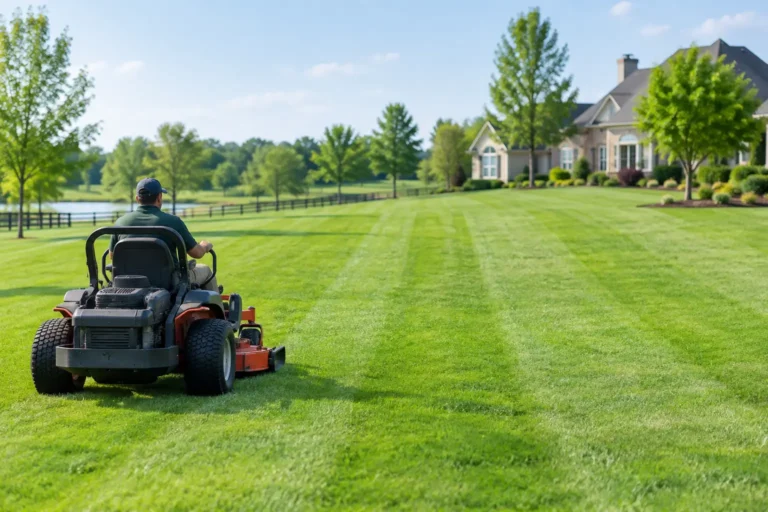
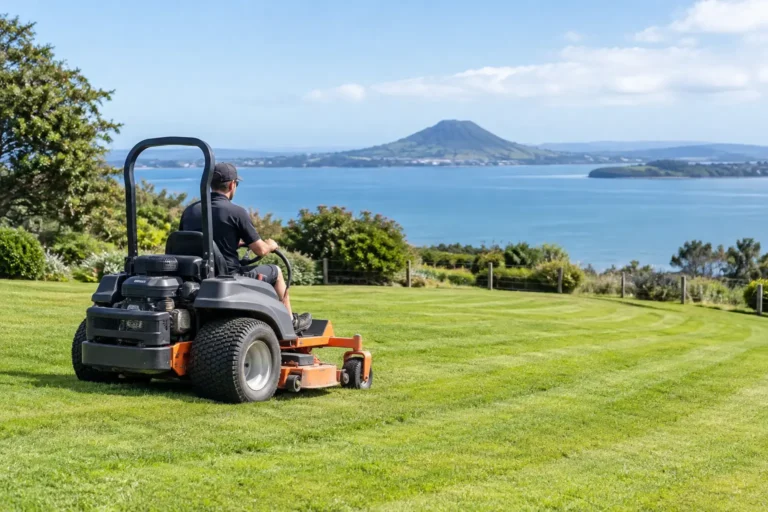
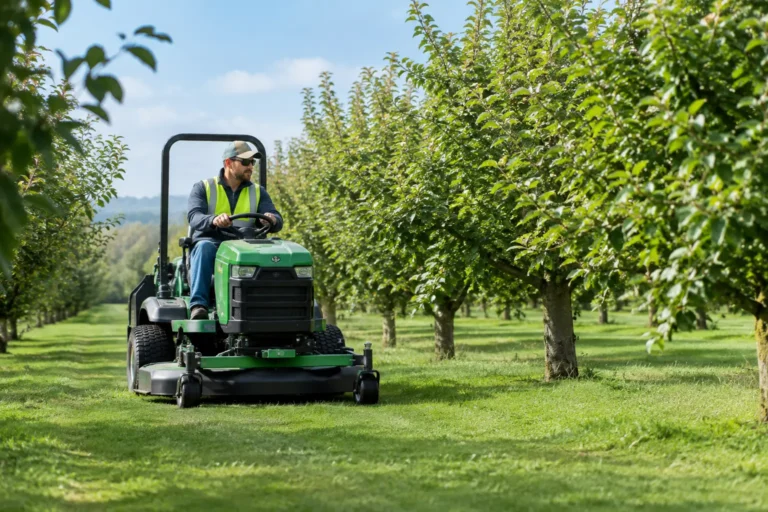
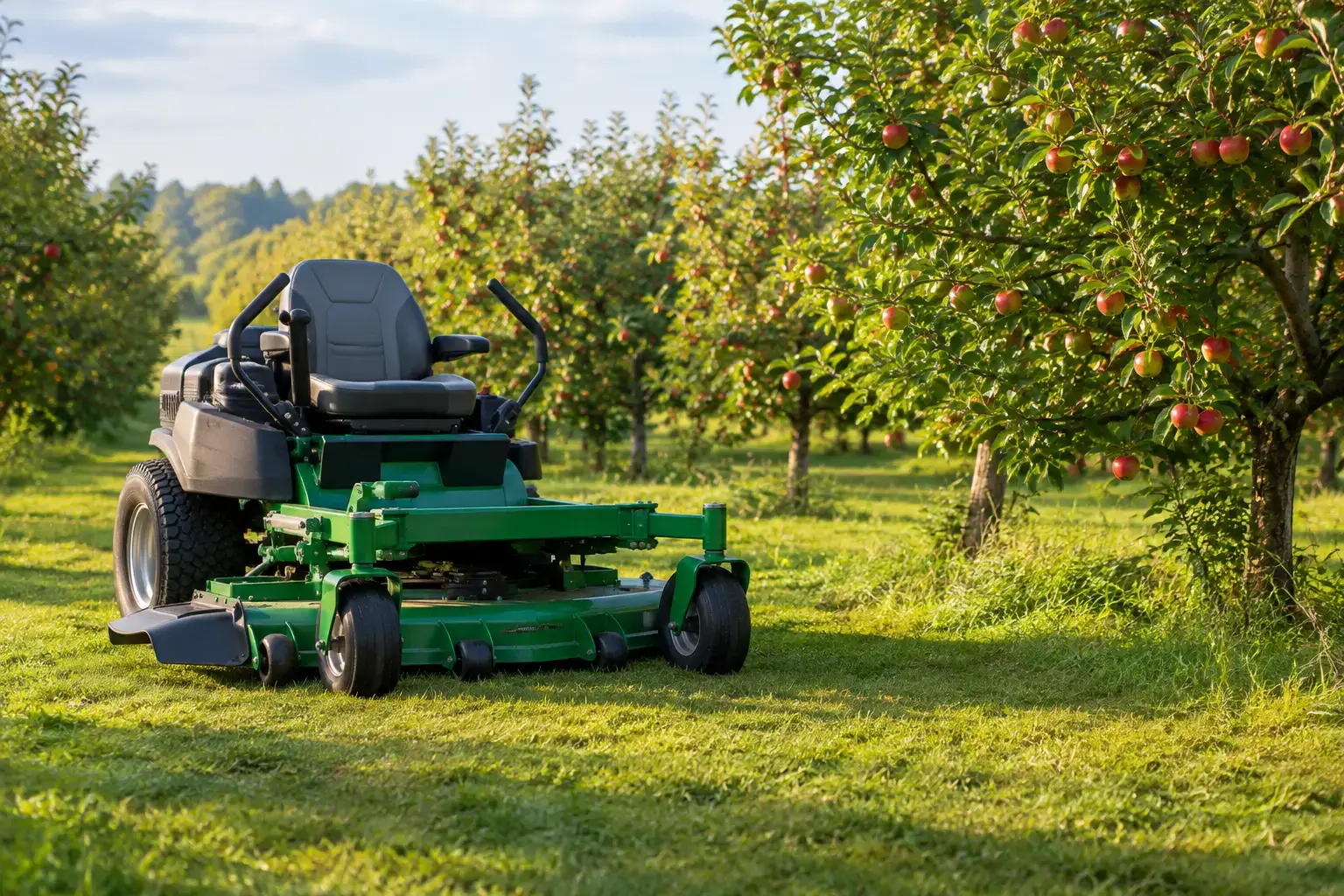
Ride-on mowing is usually the practical choice for broad, reasonably level rows and larger grassed areas around orchards. It covers ground efficiently, provides an even finish, and is well suited to properties where hand mowing would take up too much of a weekend.
This option works particularly well where trees are established, rows are consistent, and there is enough turning room at row ends. It can also be useful for grassed entrances, shelter belts, packing areas, access tracks, and land around buildings. For lifestyle orchards and larger rural properties, ride-on mowing keeps the work manageable without the owner needing to maintain a large machine themselves.
However, ride-on mowers need clear access and suitable ground conditions. Very steep slopes, deep ruts, wet soil, low branches, exposed irrigation components, or closely planted young trees can limit where a mower can safely operate. A site check before mowing helps identify these areas and set realistic expectations.
Mulching when grass growth is moderate
Mulching returns fine grass clippings to the ground rather than collecting them. In a well-maintained orchard, this can be a tidy and practical result. The clippings break down over time and are less noticeable than long windrows of cut grass.
Mulching is most effective when grass is cut regularly and is relatively dry. If the grass is already tall, dense, or wet, too much material can build up beneath the deck, leave clumps behind, or create an uneven finish. In those conditions, a more controlled first cut may be needed before a mulching routine can work well.
For many orchards in the Western Bay of Plenty, grass growth changes quickly through warmer and wetter periods. Scheduling mowing before growth becomes excessive makes mulching more reliable and helps keep lanes usable between visits.
Side discharge for heavier growth
When orchard grass has become long or thick, side discharge can be a sensible option. Instead of trying to finely mulch a heavy volume of material, the mower spreads clippings across the ground as it moves through the rows. This avoids overloading the deck and is often more suitable for a first cut after a long gap.
The trade-off is appearance. Side-discharged clippings can be more visible immediately after mowing, especially where grass is very long. They usually settle down over time, but it may not provide the cleanest finish around customer-facing areas, driveways, or packing sheds.
A practical approach is to use side discharge for recovery cuts, then move to a regular mulching or standard mowing schedule once grass is under control. This is often a better use of time than attempting a perfect finish in one pass when conditions are not suited to it.
Finishing around trunks, structures, and edges
Even a capable ride-on mower cannot safely reach every part of an orchard. Areas directly around tree trunks, posts, irrigation risers, culverts, gates, buildings, and fence lines need extra care. The closer equipment gets to trees and infrastructure, the higher the risk of bark damage, broken irrigation fittings, or thrown debris.
Some orchard owners choose to leave a managed strip around trunks, particularly where mulch, ground covers, or drip lines are present. Others arrange separate trimming for selected edges. The best choice depends on the orchard setup and whether the goal is a neat lifestyle property appearance, practical access for production work, or both.
It is worth deciding which areas genuinely need close finishing and which are better left undisturbed. Trying to mow tightly around every obstacle can increase time, cost, and risk without offering much benefit.
Choosing the Right Mowing Frequency
The best machine and mowing method will still struggle if the schedule does not match the rate of growth. Regular mowing generally produces a cleaner result, reduces clumping, and makes each visit faster and safer. It also prevents grass from obscuring potential hazards in the rows.
During active growing periods, some orchards may need mowing every two to four weeks. In slower-growing months, the interval can often be extended. Rainfall, soil fertility, shade, irrigation overspray, and the type of grass all affect how quickly the orchard floor grows.
A one-off mow can be useful before an inspection, harvest activity, property sale, or seasonal cleanup. But for owners who want neat rows without the constant planning, scheduled mowing is usually the easiest option. It keeps growth from becoming a major job and gives the property a more consistently maintained appearance.
Safety Matters More Than a Close Cut
Orchard mowing involves more obstacles than an open lawn. Fallen branches, fruit bins, hoses, electric fences, tree guards, stakes, and irrigation equipment can all affect how work is carried out. Wet grass and uneven ground also change what is safe for a ride-on mower.
Before mowing begins, it helps to clear obvious debris and identify anything that should not be driven over. If there are new plantings, low branches, recently installed irrigation lines, or areas that become soft after rain, point these out before the visit. Clear information helps the mowing operator work around sensitive areas and avoid preventable damage.
Ground conditions should guide the timing too. Mowing saturated soil can leave wheel marks or compact vulnerable areas, while mowing long wet grass can result in clippings being left behind. Waiting for better conditions is sometimes the right call, even when the grass is ready for a cut.
What to Look for in an Orchard Mowing Service
The right service should assess the property rather than assume every orchard can be treated like a flat lawn. Ask whether the mower can access your row widths, how wet or sloped ground is handled, and what areas may need to be excluded. A clear discussion upfront avoids surprises on the day.
It is also useful to explain how often you want the orchard maintained and which areas matter most. Some owners prioritize neat entranceways and wide vehicle lanes. Others want the full orchard floor maintained for easier walking, spraying access, or general property care. There is no single best result for every site.
Prime Ride-On Mowing provides ride-on mowing for larger lawns, lifestyle blocks, orchards, and commercial grassed areas throughout Tauranga and the Western Bay of Plenty. Where access and conditions are suitable, a regular service can take orchard mowing off your to-do list and keep the difficult grass from taking over.
A good orchard mowing plan should fit the land, the season, and the way you use the property. Whether you are managing a productive orchard near Te Puke, a lifestyle block in Katikati, or grassed orchard rows around Te Puna, a free quote and site assessment can help turn an ongoing chore into straightforward, regular maintenance.