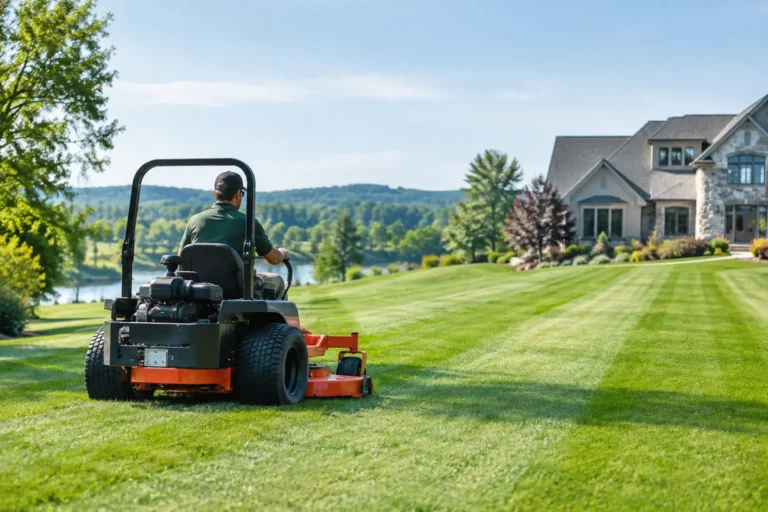

Orchard Floor Management for Safer, Tidier Rows
Long grass between orchard rows can quickly become more than a visual issue. It can hide uneven ground, slow access for workers and vehicles, hold moisture around infrastructure, and make a well-run property look neglected. Practical orchard floor management gives growers and property owners a straightforward way to keep grassed rows controlled without giving up valuable weekends to mowing.
Across Te Puna, Oropi, Te Puke, Paengaroa, Aongatete, Omokoroa, Katikati, Omanawa, Pongakawa, Maketu, Tauranga, and the wider Western Bay of Plenty, orchard properties often have large areas of grass to maintain. The right mowing schedule depends on the orchard layout, season, grass growth, access conditions, and how the land is used day to day.
What orchard floor management involves
Orchard floor management covers the care of the grassed areas between rows, around headlands, along access lanes, and in open areas surrounding sheds, yards, boundaries, and loading spaces. For many properties, regular ride-on mowing is the most practical part of that work.
The goal is not necessarily to make every row look like a residential lawn. Orchard grass needs to be kept at a sensible, workable height that supports access and presents the property well. A tidy floor can make routine checks easier, provide clearer sightlines, and reduce the amount of difficult, overgrown grass that builds up after a busy period.
It is also useful to be clear about what mowing can and cannot do. Mowing manages grass height and appearance. It does not replace weed-control programs, drainage work, pruning, pest management, or repairs to rutted lanes. Those jobs may affect how and when mowing can be completed, so a practical service starts with understanding the site rather than making assumptions.
Why regular mowing makes a difference
An orchard floor can grow quickly through warmer, wetter periods. Leaving it too long may mean heavier clippings, slower mowing, and a less even result. It can also make low obstacles, irrigation equipment, holes, and uneven terrain harder to spot.
Regular mowing helps keep the work area predictable. When rows, turning areas, and grassed access routes are maintained on a schedule, it is easier for owners, staff, contractors, and visitors to move around the property with confidence. This is particularly valuable before seasonal work, inspections, property viewings, or periods when more vehicles are using the site.
There is a visual benefit as well. A freshly mowed orchard floor gives the whole property a cared-for appearance, even when the focus is on production rather than presentation. For landlords, lifestyle block owners, and managers of mixed-use properties, that visible result can make a real difference.
The right height depends on the site
Cutting grass very short is not always the best answer. On dry ground, a slightly higher cut can help retain cover and reduce stress on the grass. In wet weather, grass may need more frequent attention to prevent it from becoming thick and difficult to travel through.
The best mowing height also depends on the orchard’s terrain, the presence of irrigation lines or low infrastructure, and the equipment moving through the rows. A suitable approach balances tidiness with ground protection and safe operation.
Choosing a mowing schedule for your orchard
There is no single schedule that suits every orchard in Western Bay of Plenty. Growth can vary significantly between sheltered Te Puna properties, exposed blocks near Maketu, and larger orchard sites around Te Puke, Paengaroa, or Pongakawa.
During periods of strong growth, regular scheduled mowing may be the easiest way to prevent grass from getting ahead of you. A consistent service can reduce the pressure of arranging a mow only once the rows are already overgrown. During slower-growth months, casual or less frequent mowing may be enough.
A good schedule should account for practical site conditions. If harvest activity, spraying, pruning, or other work is happening, mowing may need to be timed around those operations. If the ground is saturated after prolonged rain, it may be safer to wait until conditions improve rather than risk marking the surface or getting machinery stuck.
For properties with several grassed zones, it can help to prioritize the areas that matter most. Main access lanes, headlands, entry areas, and spaces around sheds may need closer attention than less-used boundaries or distant blocks.
Site conditions to check before mowing
Ride-on mowing is well suited to larger, open grassed areas, but every orchard needs an initial assessment. Clear access, manageable slopes, stable ground, and room to safely turn equipment all affect whether a section can be mowed efficiently.
Before work begins, owners should identify known hazards such as irrigation components, low wire, drainage ditches, tree guards, rocks, stumps, steep banks, and soft ground. Fallen branches and loose debris should also be removed where possible. These details protect equipment, help prevent damage to the orchard, and support safer work for everyone on site.
Rows that are especially narrow, rough, steep, or obstructed may need a different method or may not be suitable for ride-on equipment. Being upfront about those limits is better than promising a result that the site cannot safely support.
Wet ground needs a practical call
The Bay of Plenty climate can bring periods of rapid growth followed by wet ground conditions. Mowing when the soil is too soft can leave wheel marks, compact vulnerable areas, and create unnecessary risk. It may also lead to clumping if grass is wet and heavy.
Sometimes waiting a few days is the sensible choice. This can be frustrating when the grass is growing, but protecting the ground and carrying out the job safely should come first. A reliable mowing service will communicate clearly if weather or site conditions affect timing.
Keep orchard access areas working well
The areas outside the tree rows are often the ones that get overlooked. Entrances, roadside verges, loading zones, around bins, shed surroundings, and fence lines can become untidy while attention is focused on orchard operations.
These spaces matter because they shape the first impression of the property and are regularly used by vehicles and people. Keeping them mowed can improve access for deliveries, contractors, routine maintenance, and visitors. It also helps separate productive areas from long, unmanaged grass that can spread into more visible parts of the site.
For orchards combined with a home, rental, or lifestyle block, one mowing plan can often cover the main lawn, driveway edges, paddock-style grass, and orchard lanes where conditions are suitable. That is often far easier than trying to manage several large grassed areas with a small domestic mower.
When professional ride-on mowing is a good fit
Professional ride-on mowing suits orchard owners and managers who have substantial grassed areas but do not need a full orchard-management contractor for the job. It can be a practical option for one-off tidy-ups, casual mowing when growth gets away from you, or regular maintenance throughout the year.
Prime Ride-On Mowing works with larger lawns, lifestyle blocks, orchard properties, commercial grounds, and vacant sections across Tauranga and Western Bay of Plenty. Before scheduling work, the focus should be on whether the site is accessible, safe, and appropriate for ride-on mowing.
A clear quote is easier to provide when the size of the area, terrain, grass height, access points, obstacles, and preferred mowing frequency are known. Photos can be useful, but an on-site view may be needed for more complex properties.
A tidy floor gives you more time for the work that matters
Orchard work already comes with seasonal deadlines and plenty of moving parts. Grass between the rows should not become another job that takes over your weekend. Whether your property is in Katikati, Aongatete, Te Puke, Omanawa, or elsewhere in Western Bay of Plenty, keeping ahead of growth with a realistic mowing plan can make the whole site easier to use and easier to manage. If your orchard floor is getting away from you, arranging a free quote is a simple place to start.