
Steep Slope Mowing Service for Safer Properties
A steep slope mowing service is not simply a standard lawn cut on an angle. Sloping ground changes how grass is assessed, accessed, and maintained, especially on larger properties where long grass can quickly make an area look untidy or become difficult to manage. Across Te Puna, Oropi, Te Puke, Paengaroa, Aongatete, Omokoroa, Katikati, Omanawa, Pongakawa, Maketu, Tauranga, and the wider Western Bay of Plenty, many lifestyle blocks, orchards, vacant sections, and commercial grounds include grassed banks or uneven areas that need a practical mowing plan.
For property owners, the goal is straightforward: keep difficult grassed areas neat without spending weekends wrestling with unsuitable equipment. The right approach starts with understanding the slope, the ground conditions, and whether the area can be safely maintained using the appropriate machinery.
Why steep grass needs a different mowing approach
A slope adds more than a little difficulty to mowing. Ground that appears manageable when dry can become slippery after rain, while hidden ruts, soft patches, exposed roots, rocks, and drainage channels can affect access. Tall grass can also conceal changes in the surface, making it harder to judge the condition of the land before mowing begins.
This is particularly relevant on lifestyle properties and larger residential sections around the Western Bay of Plenty, where grassed areas may run alongside driveways, fence lines, orchards, retaining areas, or waterways. A bank may be only part of the property, but if it is left too long it can make the entire site look neglected.
Regular mowing helps keep grass at a manageable height. It also makes the ground easier to inspect over time, as ruts, holes, and changing conditions are less likely to be hidden by heavy growth. However, regular service does not mean every slope is automatically suitable for ride-on mowing. Safe access and operating conditions always need to come first.
What a steep slope mowing service assesses first
Before work is scheduled, a professional mowing provider should look at the actual site rather than assume all sloping areas can be handled in the same way. The angle of the ground matters, but it is only one part of the decision.
Ground firmness and weather conditions
Firm, dry ground is generally more predictable than wet or soft ground. Rain can change a manageable bank into an unsafe surface, particularly where soil is loose or the slope has poor drainage. In some cases, mowing may need to be postponed until conditions improve. That can be frustrating when the grass is growing quickly, but it is a sensible decision that protects people, equipment, and the property.
Access to the mowing area
A suitable entry and exit route is essential. The mower needs enough room to reach the work area, turn safely where required, and leave without crossing unstable ground. Narrow gates, steep driveways, parked vehicles, garden beds, and obstacles can all affect whether a ride-on mower is the right option.
For larger properties in areas such as Katikati, Te Puke, and Oropi, access can vary across the same site. One paddock-like lawn may be ideal for ride-on mowing, while a narrow or sharply sloped bank nearby may require a different maintenance arrangement.
Obstacles and property features
Fence posts, trees, drains, culverts, irrigation equipment, rocks, and low branches need to be identified before mowing starts. These features affect the route a mower can take and the finish that can be achieved. Clear communication about boundaries, known hazards, and areas that should not be mowed helps prevent avoidable issues.
Grass height and density
Long, thick grass often takes more than one pass to cut neatly. It can also place extra strain on equipment and hide uneven terrain. If a slope has been left for several months, the first visit may focus on bringing the growth back under control. Once the area is maintained on a regular schedule, each service is usually more efficient and the result is more consistent.
When ride-on mowing is suitable
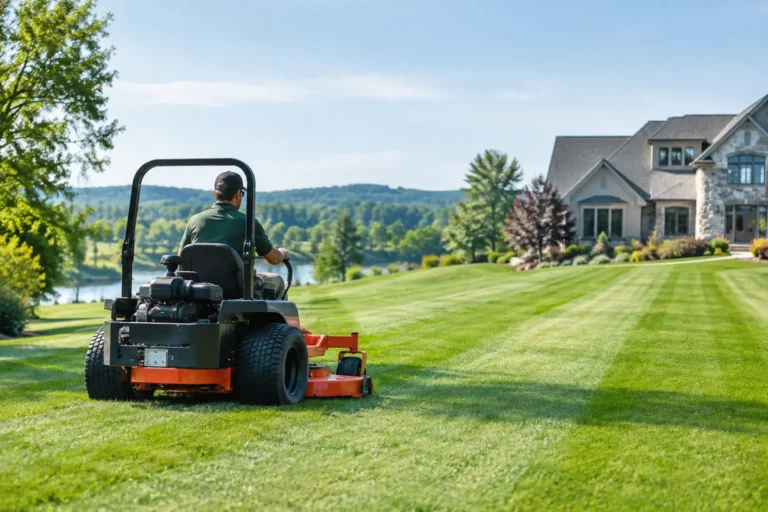
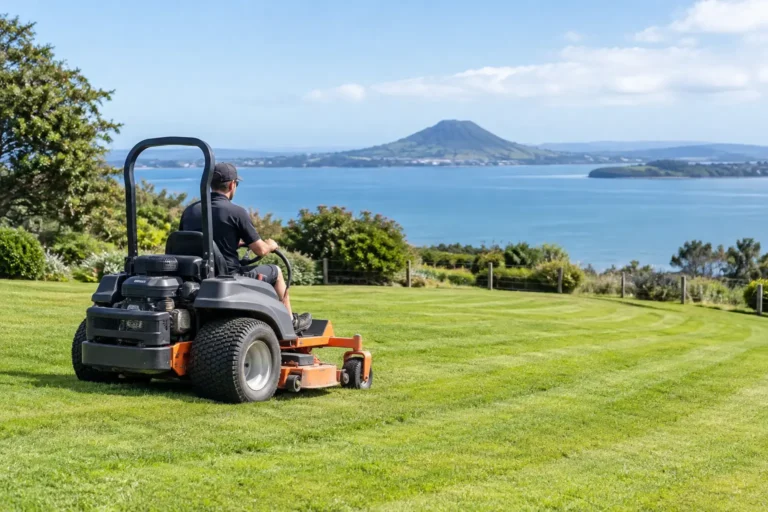
Ride-on mowing can be an efficient option for larger grassed areas with moderate, accessible slopes and suitable ground conditions. It is particularly useful for lifestyle blocks, large home lawns, school grounds, commercial properties, body corporate areas, orchard surrounds, and vacant sections where there is enough room to work safely.
The benefit is not just speed. A well-maintained grassed area creates a cleaner, more cared-for appearance and reduces the burden on owners, tenants, staff, or property managers. Rather than organizing equipment, setting aside hours, and dealing with long grass after a busy week, you can arrange mowing around the needs of the site.
That said, ride-on mowing is not appropriate for every steep area. Very sharp banks, unstable ground, wet sections, and locations with restricted access may fall outside safe operating conditions. A reliable provider should be clear about this from the start, rather than overpromise a result that cannot be delivered safely.
Regular mowing prevents difficult slopes from becoming bigger jobs
Grass does not stay manageable for long during active growing periods. On a large property, postponing mowing for a few weeks can turn a straightforward service into a heavier job, especially where slopes already slow access and mowing speed.
A regular schedule keeps the grass at a sensible height and helps maintain a tidy appearance between seasons. It can also make planning easier for landlords, body corporates, schools, and commercial property managers who need grounds to remain presentable without repeatedly arranging one-off work.
The best frequency depends on the property. A highly visible commercial frontage may need more regular attention than a rear grassed area on a lifestyle block. Vacant sections may only need mowing when growth becomes excessive or before inspections, while residential lawns and orchard surrounds often benefit from an ongoing schedule. A site assessment helps match the service to the property rather than applying a one-size-fits-all plan.
How property owners can prepare for mowing day
A little preparation can make a steep or uneven mowing job safer and more efficient. If possible, remove movable items from the grassed area, including hoses, toys, lightweight garden furniture, and loose branches. Let the mowing provider know about any hidden drains, soft ground, buried services, recent landscaping, or changes to access.
It is also helpful to keep gates unlocked or arrange access ahead of time. On rural and semi-rural properties around Aongatete, Omanawa, Pongakawa, and Maketu, access can involve long driveways, multiple gates, or separate paddocks. Clear instructions reduce delays and help ensure the correct areas are maintained.
If weather has been particularly wet, let the provider assess the ground before expecting work to proceed. Waiting for a safer mowing window is often the better option than risking wheel damage, torn grass, or unsafe operation on soft slopes.
Choosing a provider for difficult grassed areas
When comparing mowing services, look for a provider that talks plainly about site suitability. The best result is not always the lowest price or the fastest promised turnaround. It is a service that understands the limits of the equipment, checks access before starting, and communicates clearly if conditions change.
Ask whether the provider works with larger properties, how they handle long grass, and whether they offer one-off, casual, or regular mowing. These details matter when you are managing acreage, a rental property, a commercial site, or grounds shared by multiple residents.
Prime Ride-On Mowing provides practical ride-on mowing for larger lawns and properties across Tauranga and the Western Bay of Plenty. Each site is assessed for access, ground conditions, and the type of grassed area needing attention, so customers have a clear understanding of what can be safely maintained.
A tidy slope can make a substantial difference to how a property looks and feels. If a difficult grassed area is taking up your weekends or becoming harder to manage, arranging a free quote is a sensible first step. For properties from Te Puna and Omokoroa through to Te Puke, Katikati, and the wider Western Bay of Plenty, a proper assessment can turn an ongoing mowing worry into a manageable maintenance plan.